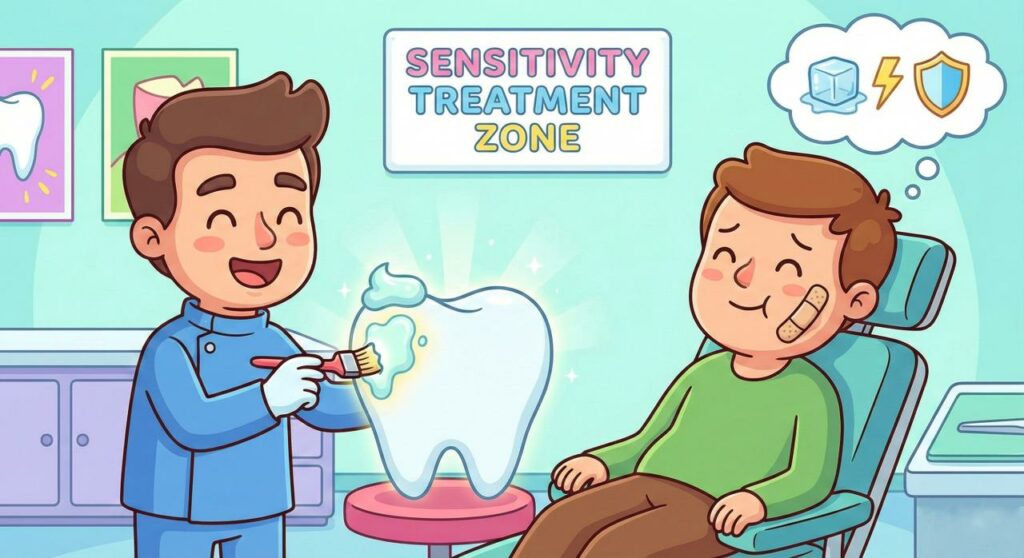
Problem: Tooth Sensitivity Is Common, But Often Ignored
You take a sip of cold water. A sudden sharp pain hits your tooth. It lasts a few seconds, then disappears.
You brush your teeth. The same thing happens.
You avoid ice cream. You drink tea a little cooler. You chew on one side of your mouth.
If this sounds familiar, you are not alone.
Tooth sensitivity, also known as dentin hypersensitivity, affects a large part of the adult population. According to the Journal of Clinical and Experimental Dentistry, studies report that between 10% and 30% of adults experience dentin hypersensitivity. Some epidemiological surveys suggest the number may be even higher depending on age group and oral habits.
Many people think sensitivity is “normal.” They believe it is something they just have to live with.
But sensitivity is not random. It is a sign that something has changed in your teeth.
And if ignored, it can get worse.
Impact: Why Sensitivity Happens and Why It Can Escalate
Under your enamel is dentin. Dentin contains tiny tubules that connect directly to the nerve of the tooth. When enamel wears down or gums recede, these tubules become exposed.
Cold, hot, sweet, or acidic foods trigger fluid movement inside these tubules. That movement stimulates the nerve. You feel pain.
Common causes include:
Aggressive brushing
Gum recession
Teeth grinding
Acid erosion from fizzy drinks or reflux
After professional whitening
After scaling and root planing
A study published in the Journal of Periodontology found that patients with gum recession were significantly more likely to report dentin hypersensitivity.
Here is the issue: sensitivity often starts mild. You ignore it. But over time:
Enamel continues to wear down
Gums continue to recede
Brushing becomes uncomfortable
Oral hygiene may suffer
That can lead to plaque buildup. Plaque buildup can lead to decay and gum disease.
Now you are no longer dealing with “just sensitivity.”
You are dealing with structural damage.
This is why early sensitivity treatment matters.
Solution: What Actually Works for Sensitivity Treatment
The good news? Sensitivity is treatable.
The right treatment depends on the cause and severity.
1. Desensitising Toothpaste
Desensitising toothpaste contains active ingredients such as potassium nitrate or stannous fluoride. These help by blocking nerve signals or sealing dentinal tubules.
A review by the Cochrane Collaboration found that many desensitising formulations significantly reduced sensitivity compared to placebo when used consistently over several weeks.
For mild sensitivity, this can be enough.
2. Professional Fluoride Application
High-concentration fluoride varnish strengthens enamel and helps seal exposed tubules.
Research published in the Journal of the American Dental Association showed fluoride varnish significantly reduced dentin hypersensitivity after periodontal treatment.
Relief can often be noticed within days.
3. Dentin Bonding Agents
For persistent cases, bonding agents can be applied to exposed root surfaces to seal tubules directly.
This provides immediate reduction in sensitivity and may last several months depending on oral habits.
4. Addressing the Root Cause
Sometimes sensitivity signals something deeper:
Gum recession may require periodontal treatment
Teeth grinding may require a night guard
Acid erosion may require dietary changes
Cracked teeth may require restorative treatment
Sensitivity treatment is most effective when the underlying cause is properly diagnosed.
Real Clinical Findings
A clinical evaluation published in the International Journal of Dental Hygiene reported that up to 62% of patients experienced temporary sensitivity after deep cleaning. However, symptoms reduced significantly within four weeks when desensitising agents and fluoride were used.
This highlights something important: sensitivity is manageable with structured care.
Accessing Sensitivity Treatment Under TRICARE
If you are a US military family living in the UK and concerned about treatment costs, support is available.
The Thatch Dental Practice is an official TRICARE Overseas Preferred Provider in the UK, working closely with United Concordia.
We welcome TRICARE patients and US military families.
Coverage depends on your individual TRICARE plan and the type of treatment required. Before starting any sensitivity treatment, we clearly explain your options and discuss expected costs so you can make an informed decision.
For covered treatments, claims are submitted directly to TRICARE/United Concordia. In most cases, you do not need to pay us directly.
Our experienced team handles the administrative process on your behalf, including claims submission and required clinical documentation. You do not need to manage paperwork yourself.
If you are experiencing toothache or urgent discomfort, contact us and we will do our best to offer the earliest appropriate appointment.
Email: patient.coordinator@thethatchdental.co.uk,
Or use the chatbot on our website for quick assistance.
We provide dental care for adults and children and are happy to support families with routine check-ups, preventive care, and ongoing oral health needs.
If you are new to the UK or newly posted to the area, the process is straightforward. Our team guides you step-by-step to ensure smooth and timely access to dental care.
Final Thoughts: You Do Not Have to Live With It
Tooth sensitivity is common. But it is not something you should simply tolerate.
Research clearly shows that with proper treatment — from desensitising toothpaste to professional fluoride and bonding agents — most cases improve significantly within weeks.
Ignoring sensitivity allows enamel wear and gum recession to progress. Addressing it early protects your teeth long term.
If cold water makes you wince, your teeth are sending you a message.
Listen to it.
Get the right sensitivity treatment.
Relief is possible.