
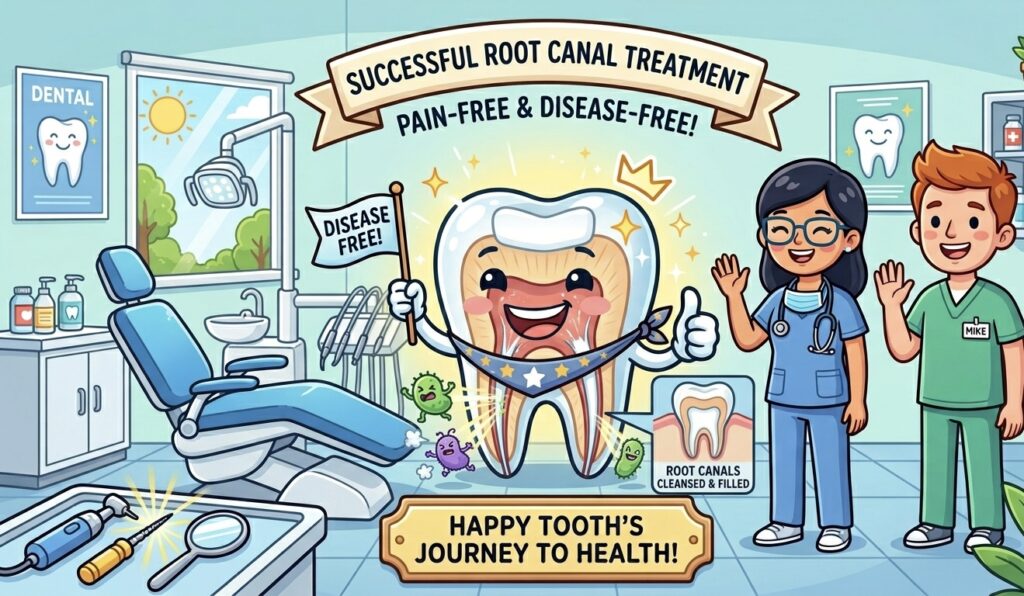
Most people hear the words “root canal” and immediately think about pain, swelling, or dental horror stories. That fear is one of the biggest reasons patients delay treatment, even when the tooth infection is getting worse.
Here’s the problem: avoiding treatment often creates more pain than the procedure itself.
A root canal is designed to save a damaged or infected tooth. In many cases, it stops severe tooth pain, prevents tooth loss, and helps patients avoid more expensive procedures later. But like any dental treatment, there can be side effects after the procedure. Some are completely normal. Others may need a follow-up visit.
Understanding the difference matters.
This guide explains the real side effects of root canal treatment, what’s temporary, what’s uncommon, and when patients should contact their dentist.
Why Root Canal Treatment Is Needed
A root canal becomes necessary when the soft tissue inside the tooth, called the pulp, becomes infected or inflamed. This usually happens because of:
- Deep decay
- Cracked teeth
- Repeated dental procedures
- Trauma to the tooth
- Severe cavities
During treatment, the infected pulp is removed, the inside of the tooth is cleaned, and the space is sealed to prevent further infection.
According to the American Association of Endodontists, more than 15 million root canals are performed each year worldwide, and modern techniques have made the procedure similar to getting a standard filling in terms of discomfort.
Still, patients may notice side effects during recovery.
Common Root Canal Treatment Side Effects
1. Mild Pain or Discomfort
This is the most common side effect.
After the procedure, the area around the treated tooth may feel sore for a few days. This happens because the tissues surrounding the tooth were already inflamed before treatment started.
Patients often describe the discomfort as:
- Tenderness while chewing
- Mild throbbing
- Sensitivity around the gum area
The discomfort usually improves within 3 to 5 days.
A 2021 clinical review published in the International Endodontic Journal found that most patients reported mild postoperative pain during the first 48 hours, but symptoms reduced significantly after that period.
Over-the-counter pain relievers are often enough to manage recovery.
2. Swelling Around the Tooth or Gums
Some swelling can happen after treatment, especially if the infection was serious before the procedure.
This side effect is usually temporary and may include:
- Slight puffiness near the gum
- Tender jaw muscles
- Minor inflammation around the treated area
Cold compresses and prescribed medications usually help reduce swelling.
However, swelling that becomes larger after several days may signal a persistent infection and should be checked immediately.
3. Tooth Sensitivity
Patients sometimes expect pain to disappear instantly after treatment. In reality, sensitivity can continue for a short time.
The tooth may react to:
- Pressure
- Biting
- Hot or cold foods
This happens because nerves surrounding the tooth still need time to heal.
A case study published by the Journal of Conservative Dentistry followed patients after root canal treatment and found that temporary biting sensitivity was one of the most common short-term recovery symptoms, especially in teeth that had severe infections before treatment.
In most cases, the sensitivity gradually fades over one to two weeks.
4. Jaw Pain or Muscle Stiffness
Keeping the mouth open during a long dental procedure can strain jaw muscles.
This side effect is more common in:
- Patients with TMJ problems
- Long treatment sessions
- Multiple root canals in one appointment
Symptoms may include:
- Jaw tightness
- Difficulty opening the mouth fully
- Mild ear-area discomfort
These symptoms are generally temporary and improve within a few days.
Less Common Side Effects Patients Should Know About
5. Uneven Bite After Treatment
After the procedure, the treated tooth may feel “higher” than surrounding teeth.
This can happen if:
- The temporary filling is slightly raised
- The crown needs adjustment
- Swelling changes bite pressure
An uneven bite can create:
- Pain while chewing
- Pressure in the jaw
- Tooth tenderness
Fortunately, dentists can usually fix this quickly with a small adjustment.
6. Tooth Discoloration
In some cases, the treated tooth may darken over time.
This happens because:
- Internal tissue changes occur
- Blood residue remains inside the tooth
- Older root canal materials stain the tooth
Modern techniques have reduced this issue, but it can still happen, especially in teeth treated years ago.
Many patients solve this with:
- Internal bleaching
- Veneers
- Dental crowns
7. Temporary Numbness
Local anesthesia is used during root canal treatment. Sometimes the numb feeling lasts longer than expected.
Patients may experience:
- Tingling lips
- Numb gums
- Temporary facial numbness
This usually disappears within a few hours.
If numbness continues for more than a day, patients should contact their dentist immediately.
Rare but Serious Root Canal Side Effects
Most root canals are successful. Still, complications can happen.
8. Persistent Infection
Sometimes bacteria remain inside the root canal system even after treatment.
This may happen because:
- The tooth has curved canals
- Hidden canals were missed
- The restoration leaked
- The infection was severe
Warning signs include:
- Severe pain after several days
- Pus discharge
- Swelling that worsens
- Fever
Research from the European Society of Endodontology reports long-term success rates for root canal treatment between 86% and 98%, depending on the condition of the tooth and quality of restoration.
In cases where infection returns, retreatment or endodontic surgery may be necessary.
9. Tooth Fracture
A tooth that has needed a root canal is often weaker because decay or infection already damaged it.
Without proper restoration, the tooth may crack later.
This is why dentists often recommend crowns after treatment, especially for molars.
A cracked treated tooth may cause:
- Sharp pain while biting
- Tooth splitting
- Sensitivity during chewing
Ignoring the final crown placement increases fracture risk significantly.
The Biggest Myth About Root Canal Side Effects
Many people still believe root canals cause illness throughout the body. This idea came from outdated research from nearly 100 years ago.
Modern scientific evidence does not support this claim.
The American Dental Association and multiple medical organizations confirm that root canal treatment is considered safe and effective when performed properly.
In fact, untreated dental infections create a much bigger health risk because bacteria can spread into surrounding tissue and even enter the bloodstream.
How to Reduce Root Canal Side Effects
Recovery is usually smoother when patients follow proper aftercare instructions.
Here’s what helps most:
Follow Medication Instructions
Take antibiotics or pain relievers exactly as prescribed.
Avoid Hard Foods Initially
Chewing hard foods immediately after treatment can irritate the tooth.
Get the Permanent Crown Quickly
Delaying the final restoration increases the risk of reinfection or fractures.
Maintain Oral Hygiene
Brush and floss normally while being gentle around the treated area.
Attend Follow-Up Visits
Dentists need to confirm healing and ensure the restoration fits correctly.
When Should Patients Call the Dentist?
Patients should contact their dentist if they experience:
- Severe pain lasting more than a few days
- Large swelling
- Fever
- Difficulty swallowing
- Allergic reactions to medication
- Persistent numbness
- A loose temporary filling
Early intervention usually prevents bigger complications.
Final Thoughts
Root canal treatment side effects are usually manageable and temporary. Mild discomfort, sensitivity, or swelling are common during recovery, especially when the tooth had a serious infection beforehand.
What matters most is understanding which symptoms are normal and which require attention.
For many patients, the real danger isn’t the root canal itself — it’s delaying treatment until the infection becomes harder to control.
Modern root canal procedures are faster, safer, and more comfortable than most people expect. And in many cases, they save natural teeth that would otherwise need extraction.
When performed correctly and followed with proper aftercare, root canal treatment remains one of the most effective ways to stop dental infection and restore oral health.