Problem: Plaque Seems Harmless… But Is It Really?
Most people don’t think twice about plaque. It’s that soft, sticky layer you feel on your teeth when you wake up or skip brushing for a day. You brush, rinse, and move on.
But here’s the issue—plaque is not just a surface problem. It’s a living film of bacteria that constantly builds up on your teeth and gums. And if it’s not removed properly, it doesn’t just sit there quietly.
It starts causing damage.
The question is not whether plaque exists—everyone has it. The real question is: what happens when you ignore it?
Impact: What Plaque Actually Does to Your Teeth Over Time
Let’s break this down in a realistic way.
Plaque forms when bacteria in your mouth mix with food particles, especially sugars and carbohydrates. Within hours after eating, this layer begins to develop.
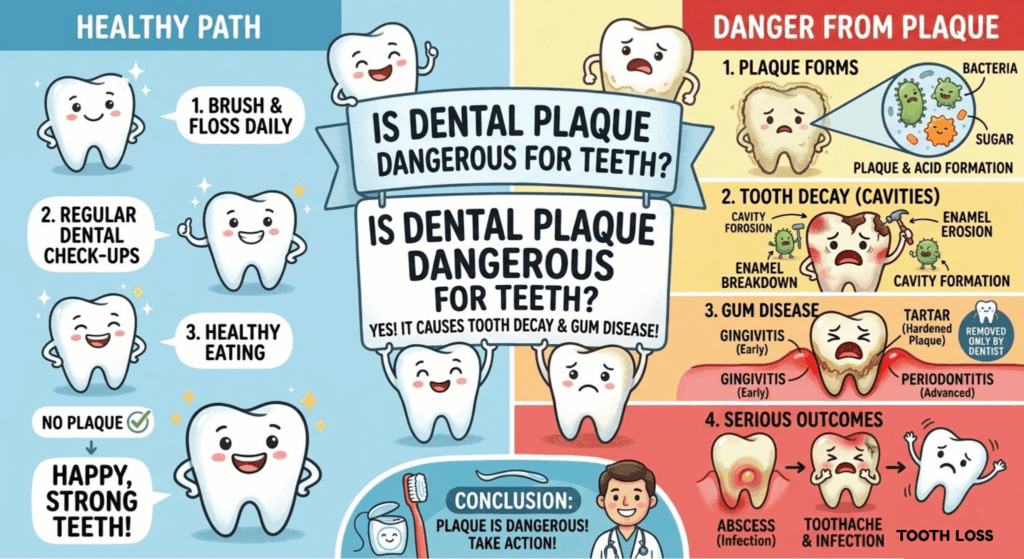
1. It Starts with Enamel Damage
Your enamel is the outer protective layer of your teeth. It’s strong, but not invincible.
Plaque bacteria produce acids when they feed on sugars. These acids attack enamel in a process called demineralisation.
- Repeated acid attacks weaken enamel
- Small weak spots turn into cavities
- Early damage is often painless, so people ignore it
Research shows acid attacks can begin within 20 minutes after sugar intake, increasing the risk of tooth decay when exposure is frequent.
2. It Leads to Gum Disease (Faster Than You Think)
Plaque doesn’t just stay on teeth—it spreads to the gum line.
When plaque accumulates near gums:
- It irritates gum tissue
- Causes redness, swelling, and bleeding
- Leads to gingivitis (early gum disease)
If untreated, this can progress to more serious gum disease where:
- Gums pull away from teeth
- Bone supporting teeth starts breaking down
- Teeth may become loose
Clinical observations show patients with long-term plaque buildup can experience significant gum deterioration within a year if no action is taken.
3. It Hardens into Tartar (Which You Can’t Remove at Home)
If plaque isn’t removed within 24–72 hours, it hardens into tartar.
At this stage:
- Brushing alone won’t remove it
- It creates a rough surface that attracts more plaque
- It worsens gum inflammation
This creates a repeating cycle that becomes harder to control without professional help.
4. It Causes Bad Breath That Doesn’t Go Away
Persistent bad breath is often linked to plaque.
The bacteria release compounds that:
- Create a strong odor
- Stay even after rinsing
- Worsen over time
Most long-term bad breath cases are directly connected to plaque buildup and gum issues.
5. It Can Lead to Tooth Loss
When plaque is ignored for long periods:
- Gum disease damages supporting bone
- Teeth lose stability
- Tooth loss becomes a real risk
This is one of the most common reasons adults lose teeth globally.
Real Case Study: What Happens When Plaque Is Ignored
A 35-year-old patient in a long-term dental observation showed this progression:
- Month 0–3: Mild plaque buildup, occasional bleeding
- Month 6: Gum inflammation and bad breath
- Month 12: Early bone loss begins
- Month 18: Tooth mobility develops
The main issue? Inconsistent brushing and no flossing.
After professional care and improved hygiene:
- Gum health improved within weeks
- Damage was partially reversed
- Tooth stability improved
This highlights something important:
Plaque damage builds slowly—but so does recovery when treated early.
Solution: What You Can Do to Control Plaque Before It Causes Damage
1. Brush Properly—Not Just Regularly
- Brush twice daily for at least 2 minutes
- Focus on the gum line
- Use a soft-bristled brush
2. Floss Daily
This removes plaque where brushing cannot reach.
Daily flossing significantly reduces gum bleeding and inflammation.
3. Use Mouthwash as Support
It helps reduce bacteria but doesn’t replace brushing or flossing.
4. Get Professional Cleaning
Even with good habits, plaque can harden into tartar over time. Regular dental visits help remove buildup and catch problems early before they become serious.
For patients who may be covered under international healthcare plans, accessing routine and preventive care can be more straightforward than expected.
5. Reduce Sugar Frequency
Frequent sugar intake feeds plaque bacteria continuously. Reducing snacking between meals helps limit acid attacks on teeth.
Support for TRICARE Patients
If you’re a US military family or covered under TRICARE, understanding your dental care options can make maintaining oral health much easier.
Do you accept TRICARE?
Yes. We welcome TRICARE patients and US military families.
The Thatch Dental Practice is an official TRICARE Overseas Preferred Provider in the UK, working closely with United Concordia.
Will TRICARE cover all of my treatment?
Coverage depends on your individual plan and the treatment required. Before starting any procedure, your options and expected costs are clearly explained so you can make informed decisions.
For covered treatments, claims are submitted directly, and in most cases you won’t need to pay upfront.
Can you help with paperwork and claims?
Yes. The team manages the full administrative process, including claim submission and documentation. You don’t need to handle paperwork yourself.
I have toothache — can I be seen urgently?
Yes. If you are in pain or discomfort, you can request an urgent appointment and the team will aim to see you as soon as possible.
You can reach out via email at: patient.coordinator@thethatchdental.co.uk or use the website chatbot for quick assistance.
Do you see children and families?
Yes. Dental care is available for both adults and children, including routine check-ups, preventive care, and ongoing support.
I’m new to the UK — will the process be complicated?
Not at all. The team regularly supports patients who are new to the UK and guides them step-by-step to ensure smooth access to care.
The Bottom Line
So, is plaque dangerous for teeth?
Yes—and more than most people realise.
It’s not just about buildup. It’s the starting point for:
- Tooth decay
- Gum disease
- Tartar formation
- Tooth loss
The damage happens gradually, which is why it’s easy to ignore.
But with the right habits—and access to proper dental care—you can stop plaque before it becomes a serious issue.
Plaque is normal. Ignoring it is what makes it dangerous.