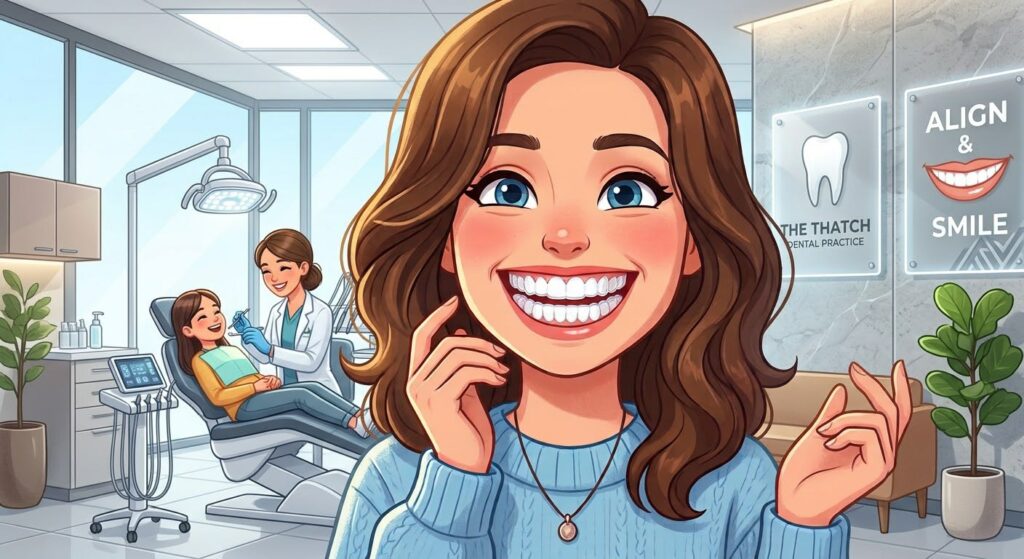
Have you ever looked at your teeth in the mirror and wished they were a little straighter? Perhaps you have a small gap between your front teeth, a few crooked teeth, or crowding that makes you uncomfortable when you smile. You want to improve your smile, but the thought of wearing metal braces for months or years does not sound appealing.
The good news is that you may be able to straighten your teeth without traditional braces. Modern dentistry offers several alternatives, including clear aligners and selected cosmetic treatments. However, the right option depends on your teeth, bite, gum health, and treatment goals.
Let’s explore how these options work, what they can realistically achieve, and how to choose a safe solution.
1. Problem: Why Do People Want to Straighten Their Teeth Without Braces?
Crooked teeth are common, but they can affect more than your appearance. Crowded or overlapping teeth may be harder to clean, making it difficult to remove plaque from certain areas. Over time, poor cleaning can increase the risk of tooth decay and gum disease.
For some people, the main concern is confidence. They may cover their mouth when laughing, avoid smiling in photographs, or feel uncomfortable speaking in front of others.
Traditional metal braces can correct many alignment problems, but they are not everyone’s first choice. Some people dislike the visible brackets and wires. Others worry about food restrictions, cleaning around the appliances, or frequent dental appointments.
You might be asking yourself:
Can I straighten my teeth without metal braces?
Are clear aligners effective for crooked teeth?
Can I fix a small gap without orthodontic treatment?
Is there a safe way to improve my smile without spending too much?
These are reasonable questions. The important thing is to understand which treatments can actually move teeth and which options only change how they look.
2. Impact: What Happens If You Choose the Wrong Solution?
When you want a straighter smile, quick online solutions can seem tempting. You may come across videos showing people closing tooth gaps at home or advertisements promising straight teeth with little effort.
But moving teeth is not as simple as pushing them into position.
Teeth are held in place by supporting tissues and bone. Moving them incorrectly can damage the gums, supporting bone, and roots. An approach that appears to work on the surface may cause serious problems underneath.
A published case discussed by the American Association of Orthodontists illustrates this risk. In the case, parents used a small rubber band to close the gap between their eight-year-old child’s front teeth. The gap appeared to close within two days, but the band slipped beneath the gums and damaged the supporting tissues.
Dental X-rays showed that the child had lost more than 75% of the bone supporting the affected teeth. Despite specialist treatment, both front teeth had to be removed. Repairing the damage took three years and nine months.
This case highlights an important lesson: a visible improvement does not always mean your teeth are healthy.
Avoid using rubber bands, homemade appliances, or unregulated DIY kits to move teeth. Before choosing a treatment, have a dentist or orthodontist assess your alignment and bite.
3. Solution: 5 Ways to Straighten Teeth Without Traditional Braces
The best option depends on the type and severity of your dental problem. Here are five approaches worth discussing with a dental professional.
Method 1: Clear Aligners
Clear aligners are transparent, removable trays made to fit your teeth. Each set applies controlled pressure to move selected teeth gradually into planned positions.
Unlike traditional braces, clear aligners do not use metal brackets and wires. They are also removable, which makes eating, brushing, and flossing more convenient.
The American Association of Orthodontists explains that aligners are commonly worn for at least 22 hours per day, with trays changed according to the prescribed treatment plan. The exact schedule depends on the case and the specific system.
Advantages:
Less noticeable than metal braces.
Removable for meals and oral hygiene.
Can correct many gaps and crowded teeth.
Custom-made to fit your treatment plan.
Things to consider: You must wear them consistently. They may not be suitable for every complex bite or tooth movement, and the cost can be higher than some other options.
Your orthodontist will determine whether clear aligners can achieve the result you want.
Method 2: Ceramic Braces
Ceramic braces work similarly to traditional braces, but their brackets are tooth-coloured or translucent. This allows them to blend in more naturally with your teeth.
Although ceramic braces are still braces, they can be a useful alternative if your dental problem requires fixed orthodontic treatment and you do not want prominent metal brackets.
They may be suitable for certain moderate or complex alignment problems, depending on your orthodontist’s assessment.
Advantages:
Less noticeable than many metal braces.
Fixed in place, so you do not have to remember to wear them.
Can address a range of alignment problems.
Things to consider: They still have brackets and wires, require careful cleaning, and may cost more than conventional metal braces.
Method 3: Lingual Braces
Lingual braces use brackets and wires attached to the backs of your teeth rather than the front surfaces.
Because the appliance sits behind your teeth, it is much less visible when you smile. This can appeal to adults who want orthodontic treatment without showing traditional brackets.
However, lingual braces are not a completely different treatment from braces. They use orthodontic forces to move teeth, and they require professional fitting and monitoring.
Things to consider: They can take time to get used to, may irritate your tongue, and can affect speech temporarily. They may also be more expensive and are not suitable for every case.
Method 4: Dental Veneers
Dental veneers are thin coverings bonded to the front surfaces of teeth. Depending on the case, they can improve the appearance of minor shape differences, uneven edges, discolouration, and small gaps.
However, veneers do not straighten teeth in the same way that orthodontic treatment does. They change the visible appearance of the teeth rather than repositioning their roots.
Some veneers require removal of a small amount of natural enamel, and that change may be irreversible. They also cannot correct every bite or crowding problem.
Advantages:
Can improve the appearance of selected front teeth.
May address certain gaps, shapes, and colour concerns.
Can provide cosmetic improvement without orthodontic tooth movement.
Things to consider: Veneers may be unsuitable for significant crowding or bite problems. Ask your dentist about tooth preservation, long-term maintenance, and alternatives before proceeding.
Method 5: Dental Bonding
Dental bonding uses tooth-coloured composite resin to change the visible shape of a tooth. A dentist applies the material, shapes it, and hardens it to create the planned appearance.
For example, if you have a small gap between two front teeth, bonding may make the gap less noticeable without moving the teeth themselves.
Bonding is generally less invasive than many veneer treatments, although the suitability and amount of tooth preparation depend on the individual case.
Advantages:
Can improve selected minor cosmetic concerns.
Often completed in a relatively short appointment.
May preserve more natural tooth structure than some alternatives.
Things to consider: Bonding does not correct the underlying position of your teeth. The material can stain, chip, or wear and may need repair or replacement.
Your dentist can explain whether bonding is appropriate or whether orthodontic treatment would produce a healthier result.
4. What Does a Real Dental Case Tell Us?
Published clinical research shows that clear aligners can achieve meaningful results in appropriately selected patients.
For example, a 2024 case report in the Journal of the American Dental Association described a 28-year-old woman with a rare condition called dentinogenesis imperfecta, which affects tooth structure. She had an open bite and an abnormal relationship between her upper and lower teeth.
After three and a half years of treatment using clear aligners, the report documented improvements in her bite and tooth relationships, without reported treatment-related injury to her teeth.
This is a single, specialised case, not proof that aligners work equally well for everyone. However, it demonstrates why treatment planning matters: even when a less visible option is available, a dentist must consider the patient’s individual dental condition.
5. How to Choose the Right Option for Your Smile
Before starting treatment, book a dental consultation. Your dentist or orthodontist may examine your teeth and gums, assess your bite, and recommend photographs, scans, or X-rays when clinically appropriate.
Ask these questions:
Is my problem related to tooth position, tooth shape, or both?
Can clear aligners safely correct my alignment?
How long is treatment likely to take?
What will the total cost include?
Will I need a retainer after treatment?
What are the risks and alternatives?
Remember that teeth can shift after orthodontic treatment. A retainer is often needed to help maintain the result, and your dental professional will advise you on its use.
Conclusion
Straightening your teeth without traditional metal braces may be possible, depending on your dental needs. Clear aligners offer a removable and discreet way to move teeth, while ceramic and lingual braces provide less visible fixed options. Veneers and dental bonding can improve the appearance of selected cosmetic concerns without actually straightening the underlying teeth.
The smartest first step is not buying a product or trying a home remedy. It is finding out what is causing your misalignment and choosing a treatment that protects your teeth and gums.
Want a straighter smile without traditional braces? Schedule a consultation with a qualified dentist or orthodontist to discuss your options, expected treatment time, and costs. A personalised plan can help you work towards a straighter smile without putting your oral health at risk.