A tooth abscess can turn a normal day into a painful one fast. The throbbing pain, swollen gums, bad taste in your mouth, and pressure in your jaw can make people search for quick fixes online. One of the most searched questions is: “How to drain a tooth abscess at home?”
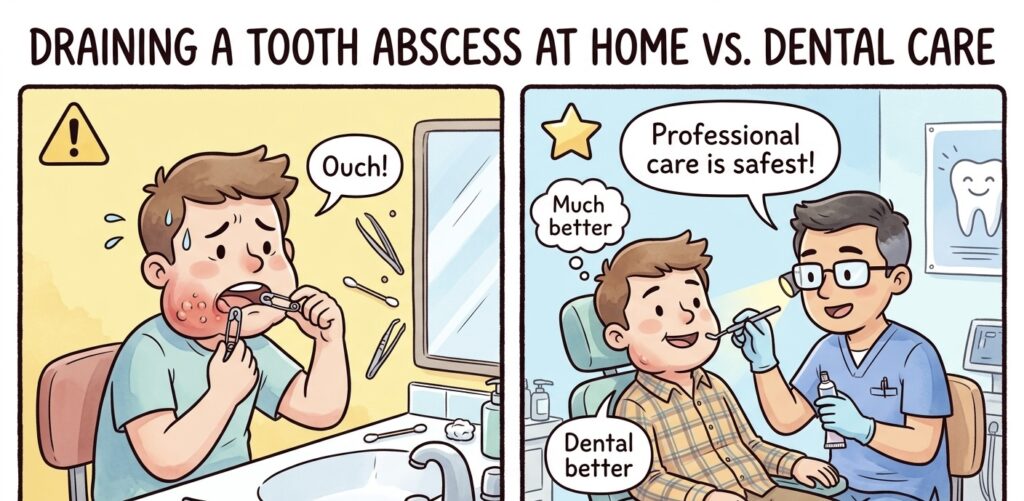
If you are here because the pain feels unbearable, you are not alone. But before grabbing a needle or trying a DIY trick from social media, there is something important you need to know: draining a tooth abscess yourself at home can go wrong quickly.
The good news? There are safer ways to manage the pain and pressure temporarily while getting proper treatment.
Problem: Why Tooth Abscess Pain Feels So Intense
A tooth abscess is a pocket of pus caused by a bacterial infection. It usually happens because of untreated tooth decay, gum disease, or a cracked tooth that lets bacteria enter deep inside.
When bacteria spread, pressure builds inside the tissue. That pressure is often what creates the sharp or throbbing pain many people describe.
Common signs of a tooth abscess include:
- Severe toothache that may spread to the jaw or ear
- Swelling in the gums or face
- Sensitivity to hot and cold foods
- A bad taste in the mouth
- Fever in some cases
- Trouble chewing or opening the mouth
Many people look for ways to release the pressure at home because the pain can interfere with eating, sleeping, and even speaking.
The problem is that online advice often makes it sound simple: poke the gum, squeeze it, and let it drain. Real life is not that straightforward.
Impact: Why Trying to Drain a Tooth Abscess at Home Can Become Dangerous
When pain gets intense, it is easy to think, “If I can just pop it, I’ll feel better.”
Sometimes an abscess may rupture on its own. You might notice fluid with a salty or unpleasant taste in your mouth and temporary pain relief. But trying to force this process yourself carries risks.
Here is why.
You May Push the Infection Deeper
Using sharp objects to pierce swollen gums can push bacteria into deeper tissues. Instead of fixing the problem, it may spread the infection.
A dental abscess does not only stay in the tooth. In some situations, infection can spread into the jaw, neck, or bloodstream.
The Pain Relief Is Usually Temporary
Even if pus drains, the source of infection remains. Think of it like emptying water from a leaking pipe without fixing the crack.
The bacteria are still there.
Without treatment, symptoms often come back, sometimes worse than before.
You Could Damage Nearby Tissue
People sometimes try needles, pins, or even sharp household items after reading online advice.
This can injure healthy gum tissue and create additional openings for bacteria.
Delayed Treatment Can Increase Risk
A study published in dental infection research found that untreated dental infections can lead to severe complications requiring hospitalization when patients delay care for too long.
In one reported hospital case review, many patients admitted for serious dental infections had initially tried to manage symptoms at home instead of seeking dental treatment early.
That does not mean every tooth abscess becomes severe. But it shows why ignoring it or relying only on home remedies is risky.
Solution: What You Can Safely Do at Home for Temporary Relief
If you are wondering how to drain a tooth abscess at home, the safer answer is this:
Avoid trying to physically cut, puncture, or squeeze it yourself. Instead, focus on helping it drain naturally and controlling symptoms until you can see a dentist.
Here are practical steps that may help.
1. Rinse With Warm Salt Water
A saltwater rinse may help reduce bacteria and encourage natural drainage if the abscess opens on its own.
How to do it:
- Mix half a teaspoon of salt in warm water
- Swish gently for 30 seconds
- Spit it out
- Repeat 3–4 times daily
This will not cure the infection, but many people feel temporary relief.
2. Apply a Cold Compress
If swelling spreads into the cheek or jaw, place a cold compress outside the face for 15–20 minutes at a time.
Cold can reduce inflammation and temporarily numb pain.
3. Keep the Area Clean
Brush gently around the affected tooth. Avoid aggressive brushing that irritates swollen tissue.
Food trapped around an abscess can make discomfort worse.
4. Use Over-the-Counter Pain Relief
Pain medicines may help reduce discomfort until treatment.
Always follow package directions or your doctor’s advice.
Avoid placing aspirin directly on the gum. This old home remedy can irritate or burn soft tissue.
5. Elevate Your Head While Sleeping
Many people notice tooth abscess pain gets worse at night.
Sleeping with your head slightly elevated may reduce pressure and throbbing.
What Happens If the Abscess Drains on Its Own?
Sometimes the abscess bursts naturally.
You may notice:
- Sudden relief of pressure
- Fluid draining into the mouth
- A bitter or unpleasant taste
- Reduced swelling temporarily
If this happens, rinse gently with warm salt water.
But here is the key point:
Do not assume the infection is gone.
The source still needs treatment. A dentist may recommend:
- Draining remaining infection
- A root canal
- Gum treatment
- Tooth extraction in severe cases
- Antibiotics when necessary
Ignoring the issue after it drains can allow bacteria to build up again.
When You Should Get Help Fast
Some symptoms should never be ignored.
Seek urgent dental or medical care if you have:
- Fever
- Facial swelling getting worse
- Trouble swallowing
- Difficulty breathing
- Swelling near the eye
- Severe spreading pain
These can be signs that the infection is spreading beyond the tooth.
A Realistic Look at Home Remedies
Many people search online hoping for a quick fix because dental appointments cost money or are difficult to schedule.
That is understandable.
But there is a difference between temporary symptom relief and actual treatment.
Home care may help reduce discomfort for a short time. It cannot remove the infected tissue causing the abscess.
That is why dentists focus on treating the source instead of only relieving pressure.
Final Thoughts
If you are searching for how to drain a tooth abscess at home, the safest approach is not to puncture or squeeze it yourself.
Instead, focus on reducing pain, encouraging natural drainage with gentle rinses, and getting professional care as soon as possible.
A tooth abscess is not something to “wait out.” What starts as tooth pain can turn into a bigger infection if ignored.
The good news is that early treatment often solves the problem before it becomes serious.
If your tooth pain feels severe or swelling is increasing, consider it a sign to act sooner rather than later.