The Question That Stops Many People from Booking the Appointment
“How painful is a wisdom tooth extraction?”
It is one of the most common questions people ask after hearing they need their wisdom tooth removed.
And honestly, it makes sense.
The thought of having a tooth pulled out sounds uncomfortable. Many people imagine severe pain, swelling, and days of suffering. Some delay treatment for months or even years because they fear the procedure more than the actual tooth problem.
This hesitation is common.
A study published in the National Library of Medicine found that dental anxiety affects between 10% and 20% of adults globally. Fear of pain is one of the main reasons people avoid dental treatment.
But here’s the reality.
Wisdom tooth extraction is usually far less painful than people expect. Modern dental techniques, local anaesthesia, and recovery care have made the process manageable for most patients.
In many cases, the pain people fear from the extraction is much less intense than the pain caused by leaving a problematic wisdom tooth untreated.
So if you are wondering what it really feels like, what the recovery is like, and whether the pain is something you can handle, this guide breaks it down clearly.
Why Wisdom Teeth Often Need to Be Removed
Wisdom teeth are the third set of molars that usually appear between ages 17 and 25.
Some people never have issues with them.
Others experience problems because there simply is not enough room in the mouth.
When this happens, wisdom teeth can:
- Grow at an angle
- Push against nearby teeth
- Stay trapped under the gum
- Cause infection
- Create swelling and jaw discomfort
According to the American Association of Oral and Maxillofacial Surgeons, about 85% of wisdom teeth eventually need removal due to complications or lack of space.
If ignored, these teeth can lead to:
- Gum infections
- Tooth decay
- Cysts
- Damage to surrounding teeth
- Ongoing jaw pain
And this is where the real issue starts.
Many people delay extraction because they fear pain.
That delay often makes things worse.
The Bigger Problem: Fear Usually Feels Worse Than the Procedure
Most people build up the extraction in their mind.
They picture:
- Sharp pain during surgery
- Hearing unpleasant cracking sounds
- Severe swelling
- Being unable to eat for days
This anxiety can become so intense that people postpone treatment until the pain from the wisdom tooth becomes unbearable.
A 2022 patient survey published in the Journal of Oral and Maxillofacial Surgery reported that over 60% of patients expected severe pain before extraction.
After treatment, however, most rated their actual discomfort as mild to moderate.
This gap between expectation and reality is huge.
The truth is that the procedure itself is usually painless.
The discomfort mostly comes afterward, and even then, it is temporary and manageable.
Does Wisdom Tooth Extraction Hurt During the Procedure?
The short answer: usually no.
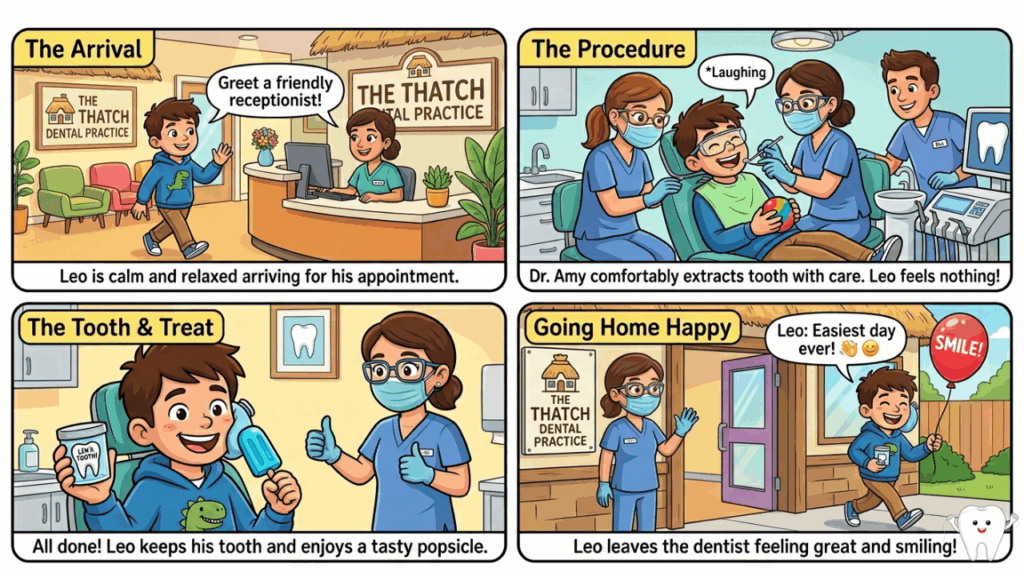
Before the extraction begins, your dentist or oral surgeon will numb the area using local anaesthetic.
You may feel:
- A small pinch during the injection
- Pressure during the extraction
- Movement or pulling sensations
But you should not feel pain.
If the tooth is impacted or difficult to remove, sedation may also be offered.
This can include:
Local Anaesthetic
You stay awake but feel no pain in the area.
Conscious Sedation
You feel relaxed and may remember very little of the procedure.
General Anaesthesia
Used for more complex cases where you are fully asleep.
A clinical review by British Dental Journal found that over 90% of patients reported no significant pain during wisdom tooth extraction when proper anaesthesia was used.
That means the procedure itself is usually not the painful part.
What Does Recovery Actually Feel Like?
This is where most discomfort happens.
After the numbness wears off, it is normal to feel:
- Mild to moderate soreness
- Swelling
- Jaw stiffness
- Minor bleeding
- Tenderness when chewing
Most patients describe it as similar to having a bruise inside the mouth.
The intensity depends on factors such as:
- Whether the tooth was impacted
- How difficult the extraction was
- Your body’s healing response
- How well you follow aftercare instructions
For a simple extraction, many people return to normal within 2 to 3 days.
For surgical extractions, recovery may take about 7 to 10 days.
A Real Case Study: What Patients Report
A case study from University of Michigan School of Dentistry followed 150 patients after wisdom tooth extraction.
Here’s what they found:
First 24 hours
- 72% reported mild discomfort
- 21% reported moderate discomfort
- 7% reported severe discomfort
After 3 days
- 80% said pain had reduced significantly
After 7 days
- 93% reported little to no pain
The study also found that patients who followed recovery instructions closely experienced faster healing and lower pain levels.
This tells us something important.
Pain is usually temporary and improves quickly.
What Makes Wisdom Tooth Extraction More Painful?
Not every extraction feels the same.
Pain can be higher if:
The Tooth Is Impacted
Teeth trapped under the gum often require minor surgery.
Infection Is Present
Existing inflammation can make recovery more uncomfortable.
Dry Socket Develops
This happens when the protective blood clot is lost too early.
Dry socket affects around 2% to 5% of routine extractions and up to 30% of impacted wisdom tooth removals, according to the National Institutes of Health.
It can cause significant pain for several days.
The good news?
It is treatable and often preventable.
How to Reduce Pain After Extraction
Recovery depends heavily on aftercare.
Here’s what helps most.
Use Ice Packs
Apply for 15 to 20 minutes at a time during the first 24 hours.
This reduces swelling.
Take Medication as Directed
Dentists usually recommend:
- Ibuprofen
- Paracetamol
- Prescription medication if needed
Research shows ibuprofen is highly effective for dental pain management.
Rest
Avoid strenuous activity for at least 24 to 48 hours.
Stick to Soft Foods
Choose:
- Yogurt
- Soup
- Mashed potatoes
- Smoothies
Avoid Straws and Smoking
These can dislodge the clot and cause dry socket.
Keep the Area Clean
Follow your dentist’s rinsing instructions carefully.
Simple aftercare makes a major difference.
Is It Better to Remove Wisdom Teeth Early?
In many cases, yes.
Younger patients often heal faster because:
- Roots are less developed
- Bone is softer
- Recovery tends to be smoother
A report from the American Dental Association notes that patients under 25 generally experience fewer complications than older adults.
Waiting too long can mean:
- More difficult extraction
- Longer recovery
- Greater risk of infection
Sometimes the pain of delaying treatment becomes much worse than the extraction itself.
For TRICARE Patients and Military Families Seeking Wisdom Tooth Treatment
For many military families based in the UK, arranging dental treatment can feel like another layer of uncertainty — especially when dealing with urgent wisdom tooth pain.
At The Thatch Dental Practice, we aim to make the process straightforward.
As an official TRICARE Overseas Preferred Provider working closely with United Concordia, we regularly support US military personnel and their families with routine and urgent dental care.
Do you accept TRICARE?
Yes.
We welcome TRICARE patients and US military families and are experienced in providing treatment under overseas coverage arrangements.
Will TRICARE cover wisdom tooth extraction?
Coverage depends on your individual TRICARE plan and the complexity of treatment required.
Before beginning treatment, all options and expected costs are explained clearly so you can make informed decisions.
For covered treatments, claims are typically submitted directly to TRICARE/United Concordia, and in many cases patients do not need to pay us directly.
Can you help with claims and paperwork?
Yes.
Our team handles the administrative process for you, including:
- Claim submissions
- Clinical documentation
- Required notes for approval
You won’t need to manage the paperwork yourself.
What if I need urgent care for wisdom tooth pain?
If you are experiencing swelling, discomfort, or toothache, contact us as soon as possible.
We will always do our best to offer the earliest appropriate appointment.
Email: patient.coordinator@thethatchdental.co.uk
You can also use the chatbot on our website for quick assistance.
Do you treat families and children?
Yes.
We provide care for adults and children, including routine check-ups, preventive treatment, and ongoing oral health support.
I’m new to the UK — will the process be difficult?
Not at all.
Our team regularly supports families newly posted to the UK and guides patients step-by-step through the treatment and TRICARE process.
So, How Painful Is a Wisdom Tooth Extraction Really?
Here’s the honest answer.
During the procedure: little to no pain
After the procedure: mild to moderate discomfort for a few days
For most people, it is uncomfortable rather than truly painful.
And when compared to the throbbing pain of an infected or impacted wisdom tooth, extraction often brings relief rather than suffering.
The fear surrounding wisdom tooth removal is usually far greater than the reality.
If your dentist has recommended extraction, asking questions and understanding the process can help remove much of the anxiety.
Because in most cases, the temporary discomfort of extraction is a small price to pay for avoiding bigger dental problems later.