
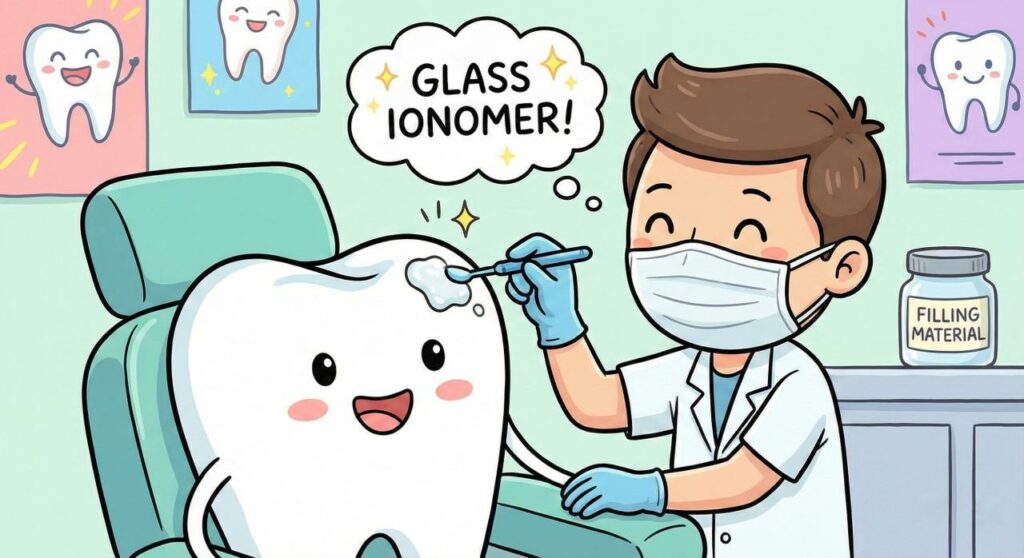
Problem: Tooth Decay Needs Treatment That Works in Real Life
Tooth decay is one of the most common dental problems worldwide. According to the World Health Organization, dental caries affects nearly 2.3 billion adults and more than 530 million children globally. Cavities do not fix themselves. Once enamel breaks down, bacteria move deeper, leading to pain, infection, and tooth loss if left untreated.
For many patients, the challenge is not just getting a filling but choosing the right one. Some fillings look good but cost more. Others last long but require more tooth removal. Parents worry about materials used in children’s teeth. Older adults worry about root decay and sensitivity. Dentists face the same question every day:
Which filling material is practical, safe, and suitable for real patients—not perfect teeth?
This is where glass ionomer fillings come into the conversation.
Yet, many patients have never heard of them or misunderstand what they are used for.
Impact: When the “Best” Filling Isn’t Always the Right One
Composite and amalgam fillings often get the spotlight. But they are not ideal in every situation.
Composite fillings require a dry working area. That is not always easy with children, elderly patients, or teeth near the gum line. Moisture contamination can reduce bond strength and shorten the lifespan of the filling.
Amalgam fillings are strong but do not bond to the tooth. They often need more tooth structure removed to stay in place. Some patients also prefer to avoid metal fillings for personal or cosmetic reasons.
Now consider these common scenarios:
A child with early decay who struggles to sit still
A patient with root caries where moisture control is difficult
A temporary restoration while waiting for a crown
A high-risk patient who keeps getting new cavities
Using the wrong material in these cases can lead to early failure, repeat visits, and higher long-term costs.
This is why dentists often choose glass ionomer fillings—not because they are trendy, but because they solve real problems.
Solution: What Is a Glass Ionomer Filling?
A glass ionomer filling is made from a mixture of fluoroaluminosilicate glass powder and polyacrylic acid. When combined, these materials form a chemical bond with the tooth surface.
Unlike composite fillings, glass ionomer does not rely only on adhesive systems. It bonds directly to enamel and dentin. This makes placement simpler and more predictable in certain situations.
One key feature sets it apart:
Glass ionomer releases fluoride over time.
This fluoride release helps protect the surrounding tooth structure and lowers the risk of further decay.
How Glass Ionomer Fillings Work in Practice
Glass ionomer fillings are commonly used in:
Small to moderate cavities
Fillings near the gum line
Baby teeth
Root surface cavities
Temporary or intermediate restorations
They are also used as a base under other fillings or crowns.
Because they tolerate moisture better than composite resin, they are useful when perfect isolation is difficult.
Real Data: What Studies Say About Glass Ionomer Fillings
A long-term clinical study published in the Journal of Dentistry followed high-viscosity glass ionomer restorations in posterior teeth over 5 years. The study reported:
Survival rates of 85–90% in low to moderate stress areas
Lower incidence of secondary caries compared to composite in high-risk patients
Another systematic review in Caries Research found that children who received glass ionomer restorations had significantly reduced new decay around treated teeth due to fluoride release.
In elderly patients, a study published in Gerodontology showed glass ionomer fillings were effective in managing root caries, especially where moisture control was limited. Failure rates were lower than composite resin in similar conditions.
These results show one clear pattern:
Glass ionomer may not be the strongest material, but it performs well where decay risk is high and conditions are less than ideal.
Benefits That Matter to Patients
Glass ionomer fillings offer several practical advantages:
Fluoride Release
Glass ionomer continuously releases fluoride and can even recharge from toothpaste or fluoride treatments. This helps slow down new decay.
Chemical Bonding
The material bonds directly to tooth structure, reducing the need for aggressive drilling.
Faster Placement
Less technique sensitivity means shorter appointments—important for children and anxious patients.
Biocompatibility
Glass ionomer is gentle on the pulp and often used in deep cavities where nerve protection matters.
Cost-Effective Option
It is often more affordable than composite, especially for temporary or preventive restorations.
Limitations You Should Know About
Glass ionomer fillings are not perfect, and dentists do not use them everywhere.
They are:
Less wear-resistant than composite or amalgam
Not ideal for large chewing surfaces under heavy load
More prone to surface wear over time
Because of this, they are usually avoided in large posterior restorations where chewing pressure is high.
A good dentist chooses glass ionomer when the situation fits, not as a one-size-fits-all solution.
Glass Ionomer vs Composite: A Practical Comparison
| Feature | Glass Ionomer | Composite |
|---|---|---|
| Fluoride release | Yes | No |
| Moisture tolerance | Better | Low |
| Strength | Moderate | High |
| Appearance | Acceptable | Better |
| Placement time | Shorter | Longer |
| Best use | High-risk decay, children, root caries | Front teeth, visible areas |
This comparison explains why many dentists combine both materials in daily practice.
Who Is a Good Candidate for Glass Ionomer Fillings?
You may benefit from glass ionomer fillings if:
You or your child has frequent cavities
The cavity is close to the gum line
Moisture control is difficult
The filling is temporary or preventive
You want fluoride protection built into the filling
Your dentist will assess bite force, cavity size, and location before recommending it.
Support for TRICARE Patients and Military Families
Choosing the right filling is only part of the decision. For many military families, understanding coverage and access to care matters just as much as the treatment itself.
At The Thatch Dental Practice, we regularly care for TRICARE patients and understand how the system works. We are an official TRICARE Overseas Preferred Provider in the UK and work closely with United Concordia to make dental care as straightforward as possible for service members and their families.
TRICARE Coverage and Treatment Costs
TRICARE coverage can vary depending on your individual plan and the type of dental treatment required. Before starting any procedure—whether it’s a glass ionomer filling or another restorative option—we clearly explain:
What treatment is recommended
What may be covered under your plan
Any expected costs, if applicable
For covered treatments, claims are submitted directly to TRICARE/United Concordia. In most cases, you do not need to pay us upfront.
Help With Claims and Paperwork
Dental claims can feel complicated, especially when you are new to the UK or dealing with a toothache. Our experienced team handles the administrative side for you. We submit claims on your behalf and provide any required clinical notes or documentation.
You do not need to manage paperwork or follow up with TRICARE yourself.
Urgent Appointments for Tooth Pain
If you are experiencing toothache, sensitivity, or discomfort, please contact us as soon as possible. We prioritise urgent cases and will do our best to offer the earliest appropriate appointment.
You can reach us at patient.coordinator@thethatchdental.co.uk, or use the chatbot on our website for quick assistance.
Care for Children and Families
We provide dental care for both adults and children. From routine check-ups and preventive treatments to fillings such as glass ionomer restorations, we support families with ongoing oral health needs at every stage.
Glass ionomer fillings are commonly used in children’s dentistry due to their fluoride release and practical placement, making them a suitable option in many cases.
New to the UK? We’ve Got You Covered
If you are newly posted to the UK, the process does not need to feel overwhelming. We are very experienced in welcoming patients who are new to the area. Our team guides you step by step, helping you access dental care smoothly and without unnecessary delays.
Final Thoughts: A Filling That Solves Real Problems
Glass ionomer fillings may not get as much attention as other materials, but they play a vital role in modern dentistry. They are practical, preventive, and backed by real clinical data.
For patients at higher risk of decay, children, and situations where perfect conditions are hard to achieve, glass ionomer fillings provide a reliable solution.
The best dental care is not about choosing the most popular material. It is about choosing the right material for the right problem.
If you have been advised to get a glass ionomer filling, it is not a compromise. In many cases, it is the smarter choice.