Is It Safe to Treat Gum Disease Without a Dentist?
Gum disease is one of the most common dental problems worldwide, yet many people ignore it or try to treat it at home. A quick online search brings up dozens of home remedies, from saltwater rinses and herbal oils to baking soda and hydrogen peroxide. While these methods may provide temporary relief, many people wonder: Is it actually safe to treat gum disease without seeing a dentist?
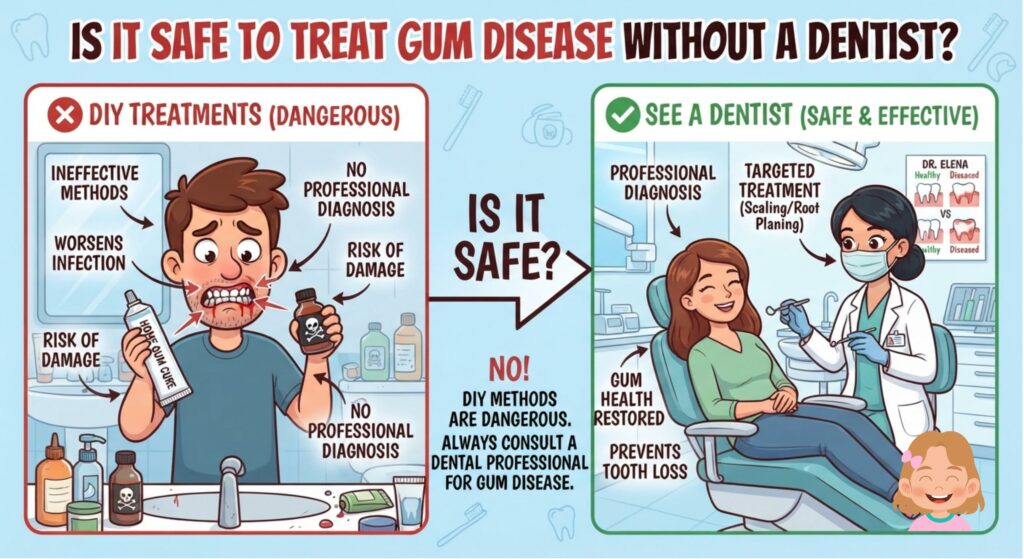
The short answer is no. Home care is important, but it cannot replace professional diagnosis and treatment once gum disease has started. Waiting too long can allow the infection to spread, leading to permanent damage that cannot be reversed.
Let’s understand why.
The Problem: Gum Disease Often Starts Quietly
Gum disease usually begins as gingivitis, the earliest stage of gum inflammation. At this point, you may notice:
Bleeding while brushing or flossing
Red or swollen gums
Bad breath that doesn’t improve
Tender gums
Because these symptoms are usually mild, many people believe they can solve the problem by brushing harder or using mouthwash.
According to the World Health Organization (WHO), severe gum disease affects around 19% of the global adult population, representing more than 1 billion cases worldwide. This makes it one of the most common oral health conditions.
The encouraging news is that gingivitis is reversible with proper professional care and good oral hygiene. The problem begins when people delay treatment.
The ILLUSION: Home Remedies Cannot Remove the Cause
The main cause of gum disease is plaque, a sticky film of bacteria that forms on teeth every day. If plaque is not removed thoroughly, it hardens into tartar (calculus).
This is where home treatment reaches its limit.
No toothpaste, mouthwash, saltwater rinse, or natural remedy can remove hardened tartar from your teeth. Once tartar forms below the gumline, only professional dental instruments can safely remove it.
Many people rely on remedies such as:
Saltwater rinses
Oil pulling
Baking soda
Herbal mouthwashes
Hydrogen peroxide rinses
These methods may reduce bacteria temporarily or soothe sore gums, but they do not eliminate the underlying infection.
Meanwhile, bacteria continue damaging the tissues that hold your teeth in place.
What Happens If Gum Disease Is Left Untreated?
When gingivitis is ignored, it can develop into periodontitis.
At this stage:
Gum pockets become deeper.
Bone supporting the teeth begins to shrink.
Teeth may become loose.
Chewing can become uncomfortable.
Teeth may eventually need to be removed.
Unlike gingivitis, the bone loss caused by periodontitis is usually permanent.
Research published by the Centers for Disease Control and Prevention (CDC) estimates that nearly half of adults aged 30 years and older have some form of periodontal disease.
This shows how common the condition is—and why early treatment matters.
A Real Case Study
A 42-year-old office worker noticed bleeding gums whenever he brushed his teeth. Since the bleeding was painless, he searched online and started rinsing with warm saltwater twice daily.
For nearly six months, the bleeding improved slightly, so he assumed the problem was under control.
However, he later noticed persistent bad breath and sensitivity while eating.
When he finally visited a dentist, examination showed moderate periodontitis with several deep gum pockets and early bone loss.
Professional deep cleaning, improved home care, and regular follow-up appointments successfully controlled the infection, but the lost bone could not be restored naturally.
His dentist explained that if treatment had started during the gingivitis stage, the gums could likely have recovered completely.
This is a common pattern seen in dental practices. Temporary symptom relief often gives people false confidence while the disease quietly progresses underneath the gums.
Can You Treat Gum Disease Yourself?
You can certainly improve your gum health at home, but only in the earliest stage and only as part of professional care.
Healthy daily habits include:
Brushing twice daily with fluoride toothpaste
Cleaning between teeth using floss or interdental brushes
Replacing your toothbrush every three months
Avoiding smoking and tobacco products
Limiting sugary foods and drinks
Drinking plenty of water
These habits help prevent gum disease and support recovery after professional treatment.
However, they cannot remove tartar or measure how much damage has already occurred.
When Should You See a Dentist?
Many people wait until pain develops.
Unfortunately, gum disease often causes little or no pain until it has become advanced.
Book a dental appointment if you notice:
Bleeding gums lasting more than one week
Swollen or red gums
Persistent bad breath
Receding gums
Loose teeth
Pain while chewing
Pus around the gums
Early treatment is usually simpler, quicker, and less expensive than treating advanced periodontal disease.
What Will the Dentist Do?
Many patients worry that gum treatment will be painful.
In reality, treatment depends on how advanced the disease is.
Your dentist or hygienist may:
Examine your gums
Measure gum pocket depths
Take dental X-rays if necessary
Remove plaque and tartar above and below the gumline
Polish the teeth
Provide personalised cleaning advice
Arrange follow-up appointments if deeper cleaning is required
Most patients experience significant improvement in bleeding and gum health after professional cleaning combined with consistent home care.
Can Natural Remedies Replace Professional Treatment?
Natural remedies have their place.
For example:
Warm saltwater may temporarily soothe irritated gums.
Staying hydrated helps maintain saliva flow.
A healthy diet supports your immune system.
Good brushing and flossing reduce daily plaque buildup.
But none of these methods replace professional periodontal treatment.
Think of home care as daily maintenance rather than a cure.
If you had a broken bone, you wouldn’t rely only on pain relief medication. Gum disease works in a similar way—the symptoms may improve temporarily while the underlying problem remains.
Preventing Gum Disease Is Easier Than Treating It
The best treatment is prevention.
Simple habits can dramatically lower your risk:
Brush for two minutes twice daily.
Clean between your teeth every day.
Visit your dentist regularly for examinations and professional cleaning.
Stop smoking if you currently smoke.
Control medical conditions such as diabetes with the guidance of your healthcare provider.
Eat a balanced diet rich in vegetables, fruits, and whole foods.
These steps help keep plaque under control before it develops into tartar and causes lasting damage.
Final Thoughts
So, is it safe to treat gum disease without a dentist?
For most people, the answer is no.
Home care is an important part of maintaining healthy gums, but it cannot remove hardened tartar or repair damage caused by progressing periodontal disease.
The earlier gum disease is diagnosed, the better the chances of reversing the condition before permanent damage occurs. If your gums bleed regularly, appear swollen, or you have ongoing bad breath, don’t assume the problem will disappear on its own.
Professional dental care, combined with consistent daily oral hygiene, offers the safest and most effective way to protect your gums, preserve your teeth, and maintain your overall oral health for years to come.