What Works and What Doesn’t
If you’ve noticed yellow or brown deposits near your gums that don’t come off with brushing, you’re probably dealing with tartar. Many people think brushing harder or using home remedies will remove it, but that’s not how tartar works.
According to the World Health Organization (WHO), oral diseases affect nearly 3.5 billion people worldwide, with gum disease being one of the most common conditions. One of the biggest causes of gum disease is tartar buildup that has been left untreated.
The good news is that tartar can be managed and prevented. The key is understanding what it is, why it forms, and which treatments actually work.
The Problem: Tartar Keeps Building Up Even When You Brush
Many people brush twice a day but still notice rough deposits on their teeth. This often leads to questions such as:
- How do I remove tartar from my teeth?
- Can tartar be removed naturally?
- Does baking soda remove tartar?
- Can I scrape tartar off myself?
These are common questions because tartar develops slowly. It often starts as soft plaque that is easy to remove with brushing and flossing. But if plaque stays on your teeth for 24 to 72 hours, minerals in your saliva harden it into tartar, also called dental calculus.
Once plaque becomes tartar, it sticks firmly to the tooth surface and cannot be removed with a toothbrush.
Why Tartar Is a Bigger Problem Than Most People Realise
Tartar is more than a cosmetic issue.
Its rough surface attracts even more plaque, creating an environment where bacteria continue to grow. Over time, this can lead to several dental problems.
These include:
- Bleeding gums
- Persistent bad breath
- Gum inflammation
- Gum disease (gingivitis)
- Periodontitis
- Tooth decay
- Loose teeth
- Tooth loss in advanced cases
The UK National Health Service (NHS) explains that gum disease is one of the leading reasons adults lose teeth, yet it is largely preventable with proper oral hygiene and professional dental care.
Many people ignore early signs because tartar usually doesn’t hurt. Unfortunately, by the time pain develops, gum disease may already be progressing.
Why Home Remedies Usually Don’t Remove Tartar
Social media is full of videos showing people removing tartar with household items.
Common suggestions include:
- Baking soda
- Lemon juice
- Vinegar
- Coconut oil
- Salt
- Metal dental picks bought online
While some of these methods may remove surface stains or make teeth feel smoother, none of them safely remove hardened tartar.
Using sharp tools at home can:
- Damage tooth enamel
- Cut the gums
- Cause infection
- Push bacteria deeper below the gumline
Acidic ingredients like lemon juice and vinegar may also weaken enamel, increasing the risk of tooth sensitivity and decay.
The Solution: Professional Tartar Removal
The safest and most effective way to remove tartar is through professional dental cleaning, often called scale and polish.
During the appointment, your dentist or hygienist uses specialised instruments to remove tartar from above and below the gumline.
Treatment usually includes:
- Examination of your teeth and gums
- Ultrasonic scaling to break away tartar
- Hand instruments for detailed cleaning
- Polishing to remove surface stains
- Advice on preventing future buildup
The procedure is suitable for most people and often takes between 30 and 60 minutes, depending on the amount of tartar present.
Many patients notice smoother teeth immediately after treatment.
Can You Remove Tartar at Home?
The simple answer is no.
Once tartar has hardened, it requires professional instruments to remove it safely.
However, you can stop new tartar from forming by controlling plaque every day.
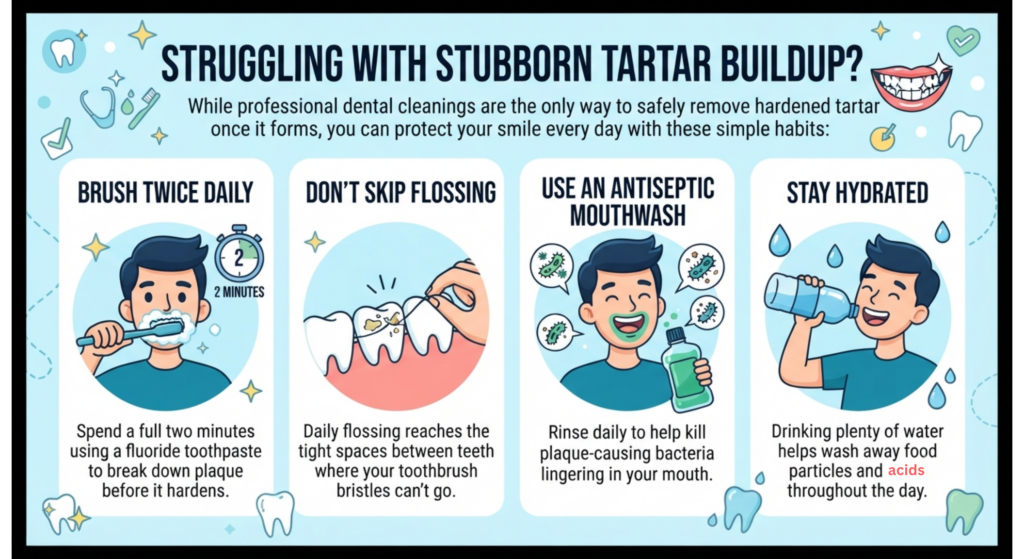
Your daily routine should include:
Brush Twice Daily
Use fluoride toothpaste and brush for at least two minutes every morning and evening.
Electric toothbrushes often remove more plaque than manual brushes because they provide consistent cleaning movements.
Floss Every Day
Almost 40% of the tooth surface lies between teeth, where toothbrush bristles cannot reach.
Daily flossing or using interdental brushes removes plaque before it hardens.
Use an Antibacterial Mouthwash
Some mouthwashes help reduce bacteria and slow plaque formation.
They should support brushing and flossing rather than replace them.
Limit Sugary Foods and Drinks
The bacteria that form plaque feed on sugar.
Reducing sugary snacks and drinks lowers bacterial activity throughout the day.
Visit Your Dentist Regularly
Professional cleaning removes tartar before it causes serious damage.
Most adults benefit from regular dental examinations, although your dentist will recommend the interval that suits your oral health.
Existing Case Study: Why Early Tartar Removal Matters
A published case in the Journal of Clinical Periodontology followed adults receiving regular professional scaling as part of periodontal maintenance.
Patients who attended scheduled cleaning appointments showed:
- Lower plaque levels
- Reduced gum bleeding
- Better control of gum disease
- Improved long-term tooth retention compared with irregular attenders
These findings support decades of research showing that routine professional cleaning, combined with good home care, significantly reduces the progression of gum disease.
This highlights an important message: removing tartar early is much easier than treating advanced gum disease later.
Signs You May Have Tartar
You should arrange a dental examination if you notice:
- Yellow, brown or black deposits near the gumline
- Gums that bleed while brushing
- Persistent bad breath
- Rough areas that don’t brush away
- Swollen or tender gums
- Teeth that feel dirty shortly after brushing
Early treatment is usually quicker and simpler than waiting until symptoms become more serious.
Can Tartar Be Prevented Completely?
No one can completely prevent plaque from forming because bacteria naturally live inside the mouth.
However, most tartar can be prevented by consistently removing plaque before it hardens.
Simple habits make the biggest difference:
- Brush twice every day
- Clean between your teeth daily
- Replace your toothbrush every three months
- Drink plenty of water
- Avoid smoking
- Attend routine dental check-ups
- Have professional scale and polish appointments when recommended
Consistency matters far more than expensive products.
Frequently Asked Questions
Can baking soda remove tartar?
No. Baking soda may help remove some surface stains but cannot remove hardened tartar.
Is tartar removal painful?
Most people experience little discomfort during routine scaling. If large amounts of tartar are present or your gums are inflamed, your dentist can discuss ways to keep you comfortable during treatment.
How quickly does tartar form?
Plaque can begin hardening into tartar within 24 to 72 hours if it is not removed.
Does mouthwash remove tartar?
No. Mouthwash helps reduce bacteria and plaque but cannot dissolve existing tartar.
Can I scrape tartar off with a dental tool?
This is not recommended. Home scraping can damage enamel and gums and increase the risk of infection.
Final Thoughts
Tartar is one of the most common dental problems, but it is also one of the easiest to manage when treated early.
No toothpaste, mouthwash, or home remedy can safely remove hardened tartar once it has formed. Professional scaling remains the only reliable solution.
The best approach is simple: prevent plaque every day, attend regular dental check-ups, and don’t wait until your gums begin to bleed or your teeth become painful.
Healthy teeth are built through consistent daily care and routine professional cleaning—not quick fixes found online. Taking action today can help protect your smile, reduce the risk of gum disease, and keep your natural teeth healthy for years to come.v